
Dallas City Directory Holdings by Year
Dallas historical volumes are held across several repositories, not in one uninterrupted run. Dallas Public Library History & Archives is the local shelf for printed city, telephone, and criss-cross directories, while the Texas State Library and Archives Commission list supplies the broadest year inventory. That inventory begins with 1875 and reaches 1991, but it has gaps, separate film variants, and social-directory editions. Check a specific volume before planning a trip or treating a missing year as proof that no book was issued.
| Collection | Years | Where Held | Access |
|---|---|---|---|
| Dallas city-directory run | 1875-1991, with gaps | Dallas Public Library and TSLAC-listed libraries | Catalog, reading room, and microfilm availability vary |
| Butterfield and Rundlett title | 1875 | Briscoe and TSLAC listings | Earliest located Dallas directory title |
| Evans and Worley / John F. Worley series | 1897-1956 | Briscoe, TSLAC, and local collections | Look for resident and street sections |
| R.L. Polk Greater Dallas series | 1964-1982 | Briscoe and TSLAC listings | Later resident and business context |
| Portal to Texas History collection | 18 decades, 106 Dallas County items | UNT portal and Dallas Public Library partnership | Free image, full-text, and metadata search where digitized |
The 1957-onward telephone-book runs add phone and address context, but they are not proof of a current residence. A Dallas entry is strongest when its book year, publisher, page, and section are recorded alongside the name. The library’s copy may differ from a digitized copy or another holding library’s microfilm.
Note: Dallas directory coverage is a shelf-by-shelf record, so confirm the exact year and format before relying on a gap.
Dallas Directory Shelves and Staff
The seventh-floor Dallas History & Archives room at the J. Erik Jonsson Central Library is the practical local stop for Dallas directories, maps, yearbooks, newspapers, manuscripts, and photographs. Its materials do not circulate. The room is at 1515 Young Street, and the collection phone is 214-670-1400. Dallas genealogy material on the eighth floor adds microfilm and microfiche readers, a volunteer desk, and the Heritage Lab digitization service by appointment. Ask with a name, address, school, church, or decade instead of a broad request for every reference to a person.
The Dallas Public Library History & Archives page shows the local research setting that supports a historical-volume search. It also identifies newspapers, Sanborn maps, property maps, and obituary leads that can test a directory finding.
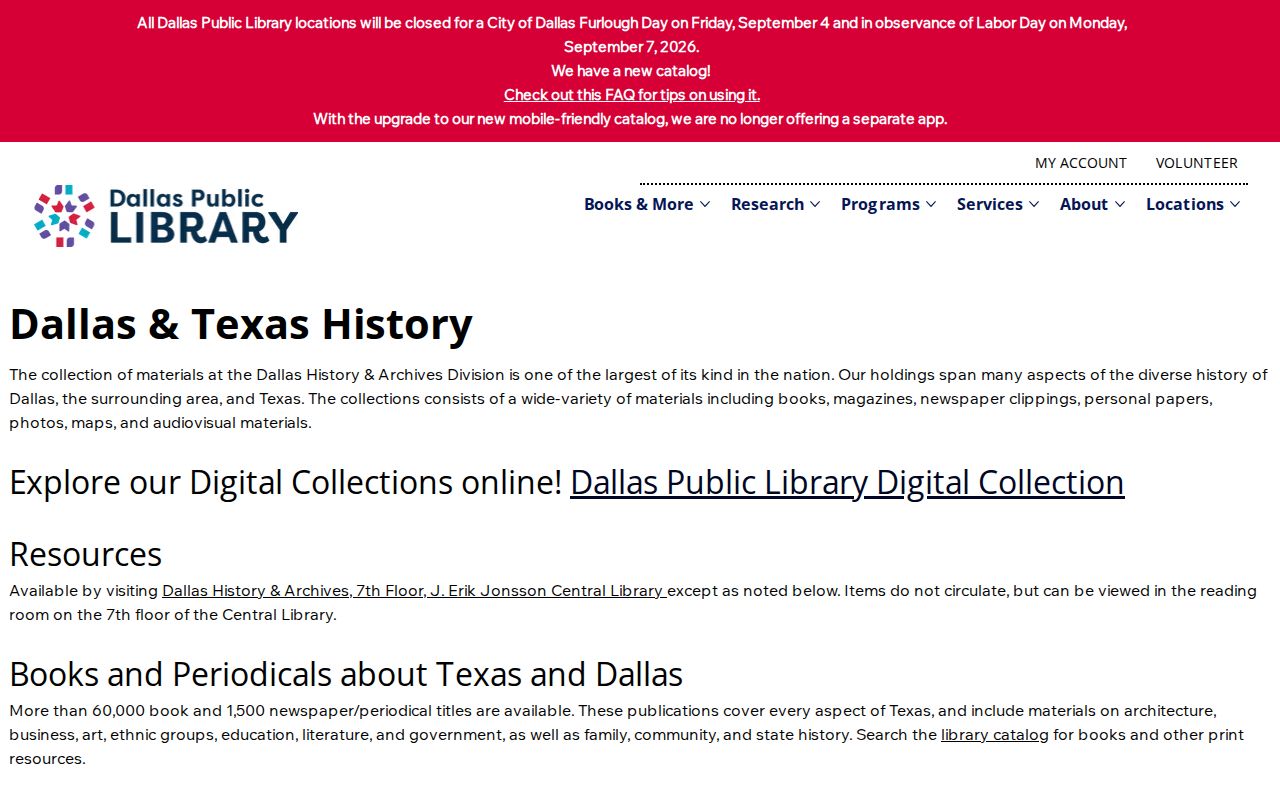
A directory line becomes more useful when the same Dallas address is checked against a map, newspaper item, or yearbook held by the library. For scans or research questions, the library lists texas@dallas.gov; the genealogy floor lists genealogy@dallas.gov and 214-670-1433.
Dallas Digitized Volumes at UNT
Digitized Dallas volumes have a separate discovery route through the Portal to Texas History. The collection reports 361 items across 22 partners, and its Dallas County facet reports 106 items. Guided, Advanced, and Proximity search can be narrowed by full text, metadata, title, subject, creator, or name. Those choices make it possible to test a surname, an employer, or a neighborhood term before requesting a physical volume.
The Portal to Texas History city-directory collection displays the collection facets used to reach digitized directory pages. Read the scanned page and retain its page citation, rather than relying only on a search-result excerpt.
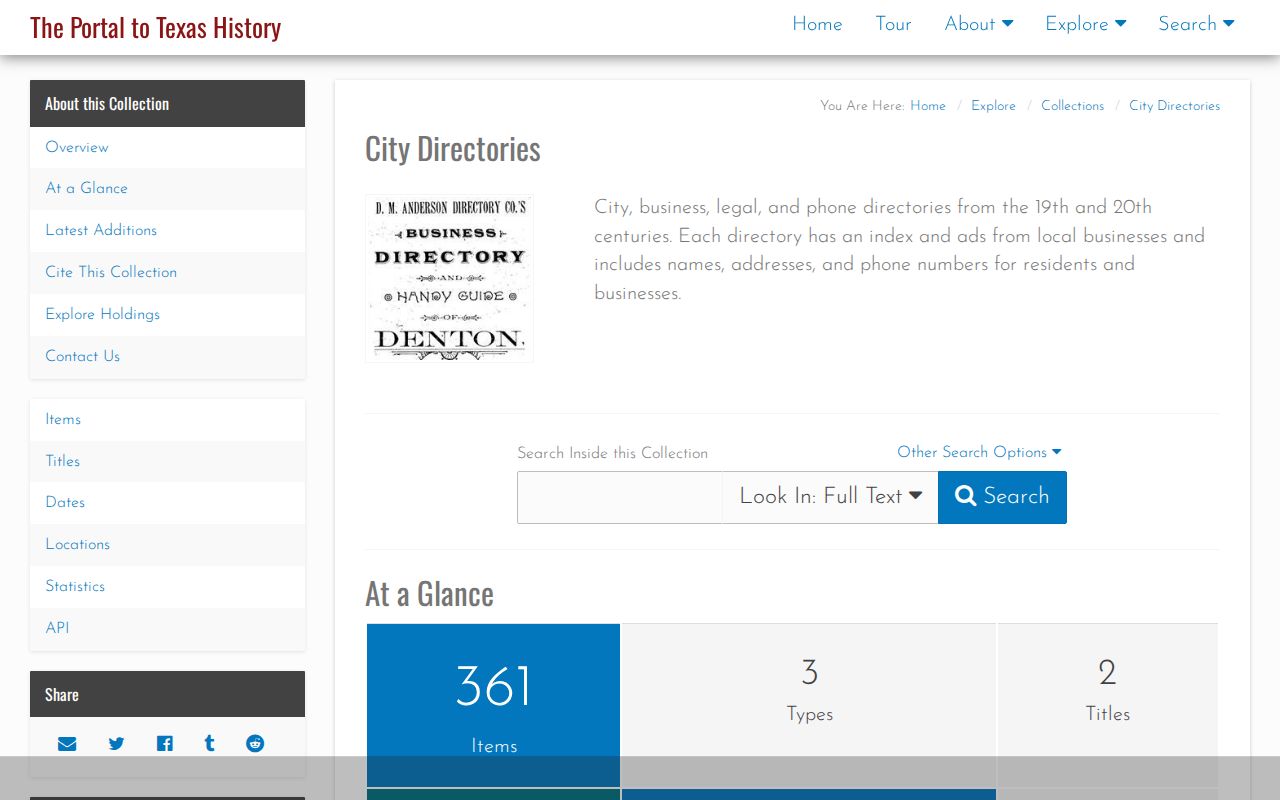
A digitized Dallas page may include names, addresses, occupations, telephone material, advertisements, or indexes depending on the book. A result that names a person still needs the page image and its surrounding heading for context.
Dallas Begins in 1875
The earliest located Dallas city-directory title in the gathered holdings is F.E. Butterfield and C.M. Rundlett’s 1875 City Directory of City Dallas. Later volumes show a changing publisher trail rather than one permanent series. C.D. Morrison & Co. appears with an 1878 general directory, Morrison and Fourmy cover early runs, and Evans and Worley, John F. Worley & Co., R.L. Polk, Southwestern Bell, and GTE appear in later eras. Publisher and year are therefore useful search terms, especially when a catalogue does not group all Dallas volumes together.
The Dallas historical record has gaps beyond directories. Dallas County was created in 1846, and its stone courthouse was destroyed by fire in 1880 before the remains were rebuilt. The fire and later incomplete court series are reasons to preserve a book’s publisher, year, and access path, instead of assuming every Dallas record moved cleanly from paper to a searchable database.
- 1875: Butterfield and Rundlett’s Dallas title is the earliest located directory in the source set.
- 1886-1891: Morrison and Fourmy volumes supply an early publisher run.
- 1897-1956: Evans and Worley and John F. Worley & Co. form a long Dallas series.
- 1964-1982: R.L. Polk’s Greater Dallas series supplies later directory coverage.
- 1991: TSLAC’s available Dallas list reaches this year, without establishing a definitive final printed volume.
Reading a Dallas City Directory Entry
A Dallas city directory entry must be read in the book that printed it. The common resident pattern is a surname and given name, sometimes followed by a spouse or household notation in parentheses, then occupation or employer and a home address. Some volumes also carry an owner, renter, widow, telephone, business, or cross-reference mark. The collected research did not capture one stable public Dallas page image with a complete local abbreviation key, so a mark should remain unexpanded until the key in that volume is checked.
| Printed name | Copy the exact spelling, initials, suffix, and any cross-reference. |
|---|---|
| Household note | Record a spouse or relative shown in parentheses without assuming the relationship beyond the print. |
| Occupation or employer | Use it as a period clue, not as proof of a present address. |
| Address | Keep the house number, street form, and whether the listing is home or business. |
| Volume citation | Save the publisher, year, page, section title, and any telephone exchange. |
- Criss-cross directory
- A historical address-first section where a street and number point toward an occupant or householder.
- Householder index
- An entry arrangement that identifies the person or household associated with a listed address.
- Abbreviation key
- The publisher’s explanation of its own marks, usually near the front of that particular volume.
Dallas holdings include city, telephone, and criss-cross directories. A reader should not automatically give the same meaning to h, r, b, clk, or a widow mark in every Dallas book. Photograph or transcribe the local key before interpreting those characters.
Dallas Criss-Cross Directory Routes
For an old address, the Dallas criss-cross directory changes the question from name-first to address-first. Begin with the street name as printed, then test directional and suffix variants. Compare nearby numbers and the alphabetical resident section, because the address may have been entered differently in each part of the volume. A criss-cross hit is a historical lead, not proof that every listed person occupied the property for the entire year.
Modern parcel and deed work belongs with the Dallas street directory record trail. The historical shelf can supply the prior householder, while DPL maps, deed records, census images, newspapers, or permits help confirm whether the same place and household are involved.
Note: Preserve the printed street form and page number, since a later street label may not match the directory’s wording.
Tracing Dallas City Directory Households
Tracing a household works best as a dated comparison, not as a single isolated lookup. Start with the exact Dallas city directory citation, including the publisher, year, page, name form, address, occupation, and any spouse note. Then check the next available volume in both directions. A change in initials, spelling, widow notation, street number, or occupation can point toward a move, a death, or a different household with a similar name.
- Record the full directory citation and the entry exactly as printed.
- Search the nearest earlier and later available Dallas volumes, noting each name or address variation.
- Pair the directory year with the nearest released federal census, which can add household members and birthplace information.
- Test the address with Murphy & Bolanz block and addition books, Sanborn material, deeds, or permits when the street history is uncertain.
- Use an obituary, probate file, church register, yearbook, or newspaper to confirm a move, relationship, death, or school connection.
Federal census images follow the National Archives 72-year public-release rule. Dallas directories can fill years between census releases, while census household detail can check whether a name in a directory belongs to the intended family. Confirm a key identity with a second record before joining two entries.
Dallas Newspapers, Yearbooks, and Archives
Dallas library collections add the people and place detail that directories often omit. DPL identifies Dallas Morning News coverage from 1885-1984 through library or in-library access, Newspapers.com Texas coverage from 1842-2024, microfilm newspapers, more than one million photographs, roughly 300 oral histories, and manuscripts or vertical files. Yearbooks can test a school-era identity. Texas Church Records includes Dallas County material from St. Matthew’s Episcopal Cathedral and Taylor Street Cumberland Presbyterian Church, with baptisms, confirmations, marriages, burials, minutes, and statistical registers.
The Dallas Historical Society collections page presents another Dallas research route for photographs, documents, artifacts, books, and periodicals. Its collection-level help is useful when a directory address leads to a civic, neighborhood, political, or event record.
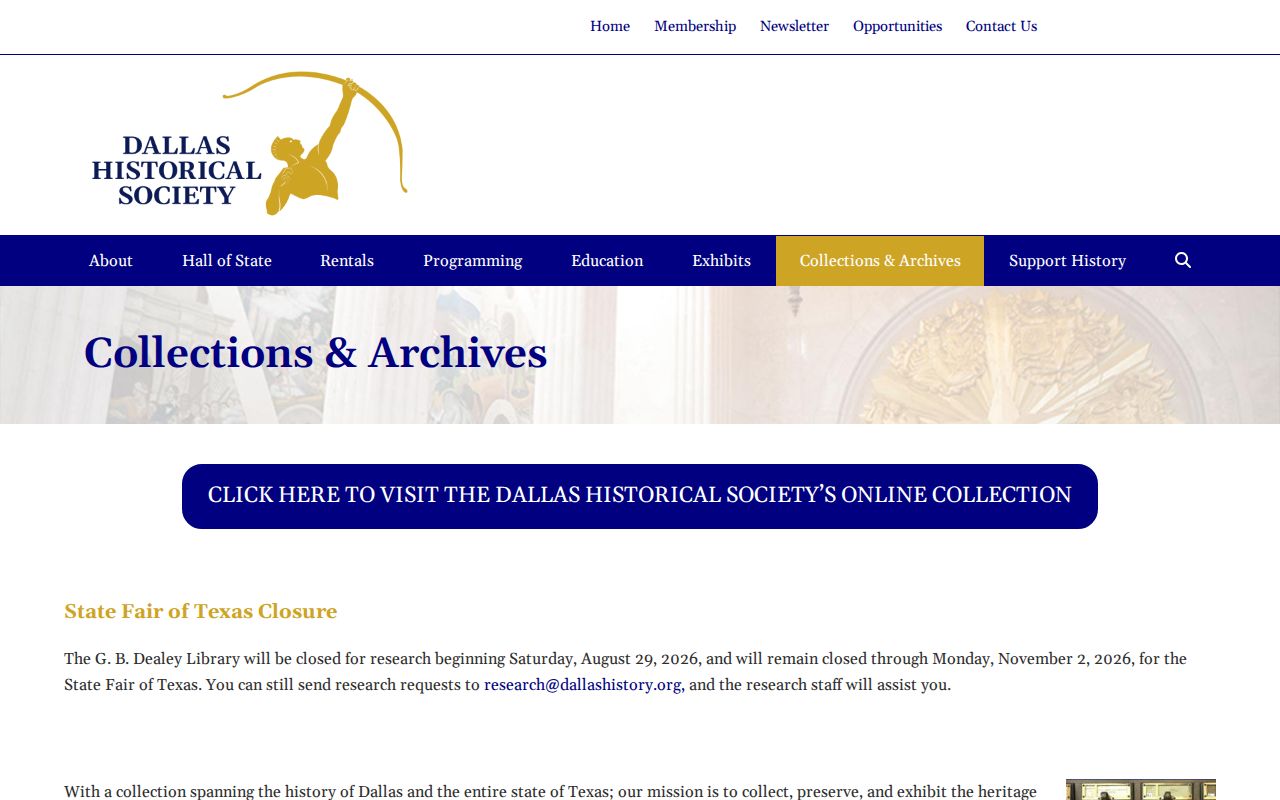
These Dallas companion sources can reconnect a family member or former classmate without pretending there is one complete people database. Check research-access terms and image permissions with the Historical Society before reproducing collection material.
Dallas Directory Gaps Need Handoffs
A failed Dallas city directory search has several documented next routes. Check the physical or microfilm copy at DPL, the TSLAC or Briscoe holding list, the Portal to Texas History, a Texas State Library catalogue, or the Dallas Historical Society. If an older address is the real question, move to the legal lot or block through deeds, Sanborn maps, or Murphy & Bolanz material. The value of a negative result is the handoff it creates, not an unsupported claim that the person was absent.
Dallas court research also has known quirks, including an 1856 case-number restart, date transpositions, missing cases, and a major 1921-1940 District Clerk loss with surviving reels for some files. Those gaps do not change a directory entry, but they explain why a related court name may require alternate spellings, neighboring years, newspapers, minutes, deeds, or probate.
Note: Write down each Dallas repository and failed year so the next search starts from an evidence-based handoff.