
Confirming Dallas Resident Matches
Dallas records answer different questions. The property roll can connect an owner of record to a parcel, while the Texas voter tool checks an individual registration match. Court and probate indexes can supply a case number or party spelling. Vital indexes can add an event date or county, subject to their access rules. No one result proves every detail. A careful resident lookup records what each system actually identifies, then compares the overlap.
| Record | What It Confirms | Where | Access |
|---|---|---|---|
| DCAD parcel | Owner of record, situs and mailing labels, parcel context | Dallas Central Appraisal District | Free owner, address, account, business, and map searches; mailing is not occupancy proof |
| Voter registration | Registration status and polling-place information | Texas voter lookup | Individual identity-match route; protected fields and voters are restricted |
| Court case index | Party spelling, case number, court, setting, and file lead | Dallas County and District Courts portal | Public interface; sealed, juvenile, family, and protected material is limited |
| Probate | Estate parties, heir, will, guardian, or cause-number lead | Dallas County records search | Name or cause-number search; older files can require clerk contact |
| Marriage or death index | Event date, county, and relationship lead | Texas DSHS Vital Statistics | An index is not a certified copy; eligibility rules apply |
| Business filing or DBA | Entity, registered agent, officer, manager, or filing-history lead | Texas SOSDirect and the County Clerk | Business affiliation, not a home-address finding |
Start with the record that matches the fact already known. Use DCAD when the starting point is a property owner or street address. Use the voter tool for a known individual registration question. Use courts when a party name or case reference is available. For a family-history question, a vital index, directory, obituary, and probate file may each add a dated connection. A Dallas resident lookup becomes more reliable when it preserves the source, exact spelling, jurisdiction, and date for every match.
Dallas Resident Lookup Sources
DCAD separates the owner name, property address, and tax-roll mailing address. Its owner route needs a last name of at least two characters without spaces, and a first-name search works best with at least two letters. The address route accepts a number, direction, street name, building or suite, city, and number range. A property card can show the owner, situs address, mailing address, legal description, values, exemptions, taxing jurisdictions, and account history. Those labels matter because the mailing address may be elsewhere.
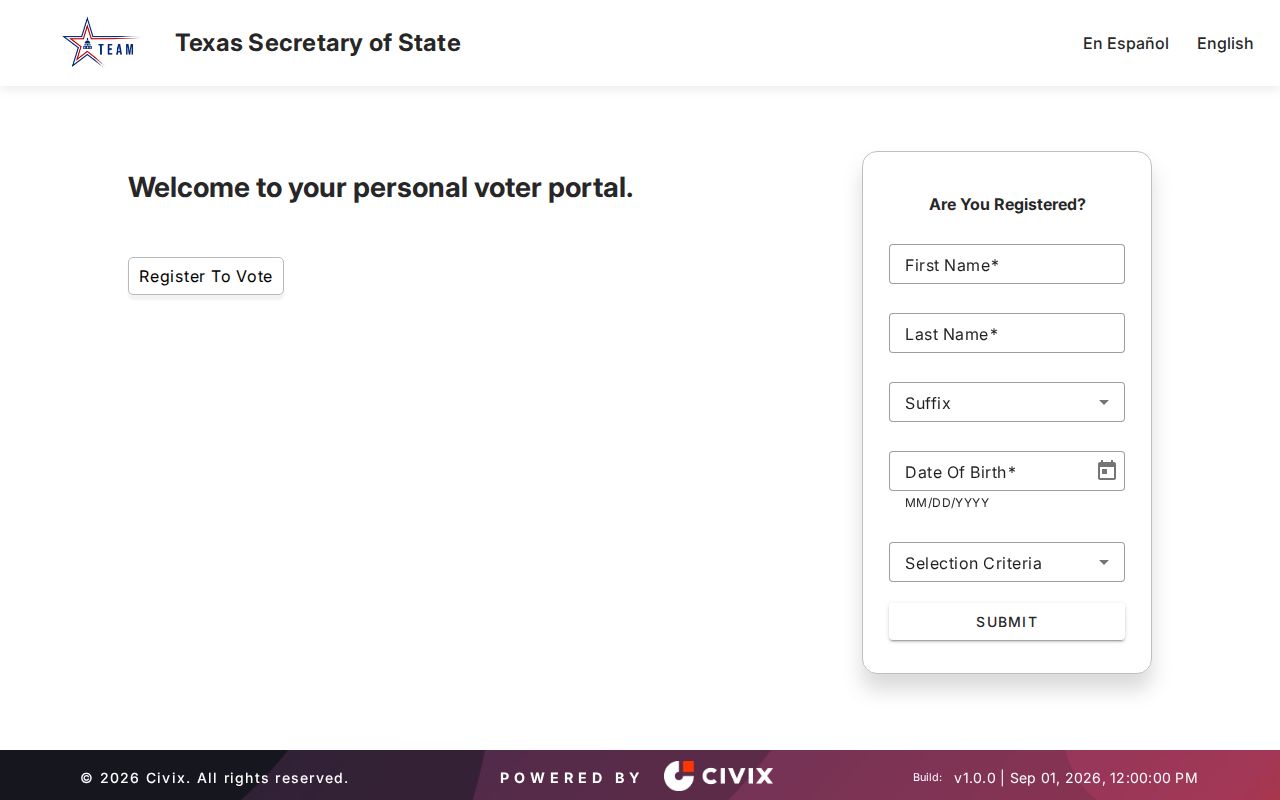
The Texas voter lookup is narrower. It is meant to check a person’s registration status and polling place, not to produce a full voter file. The name route uses first name, last name, date of birth, Dallas County, and a ZIP-type location confirmation. A VUID or a Texas driver license number can be a better route when a common name creates several possible matches. Do not treat a voter result as a general address directory.
The Texas voter lookup form shows the Dallas identity-search choices used for a resident lookup.
Use a name variation only when it preserves the person’s real naming pattern, then retain the matching county and other non-sensitive discriminator in the research notes.
Note: A DCAD homestead exemption is an owner-occupancy clue, not conclusive proof that a named person currently lives at that parcel.
Dallas Court Record Names
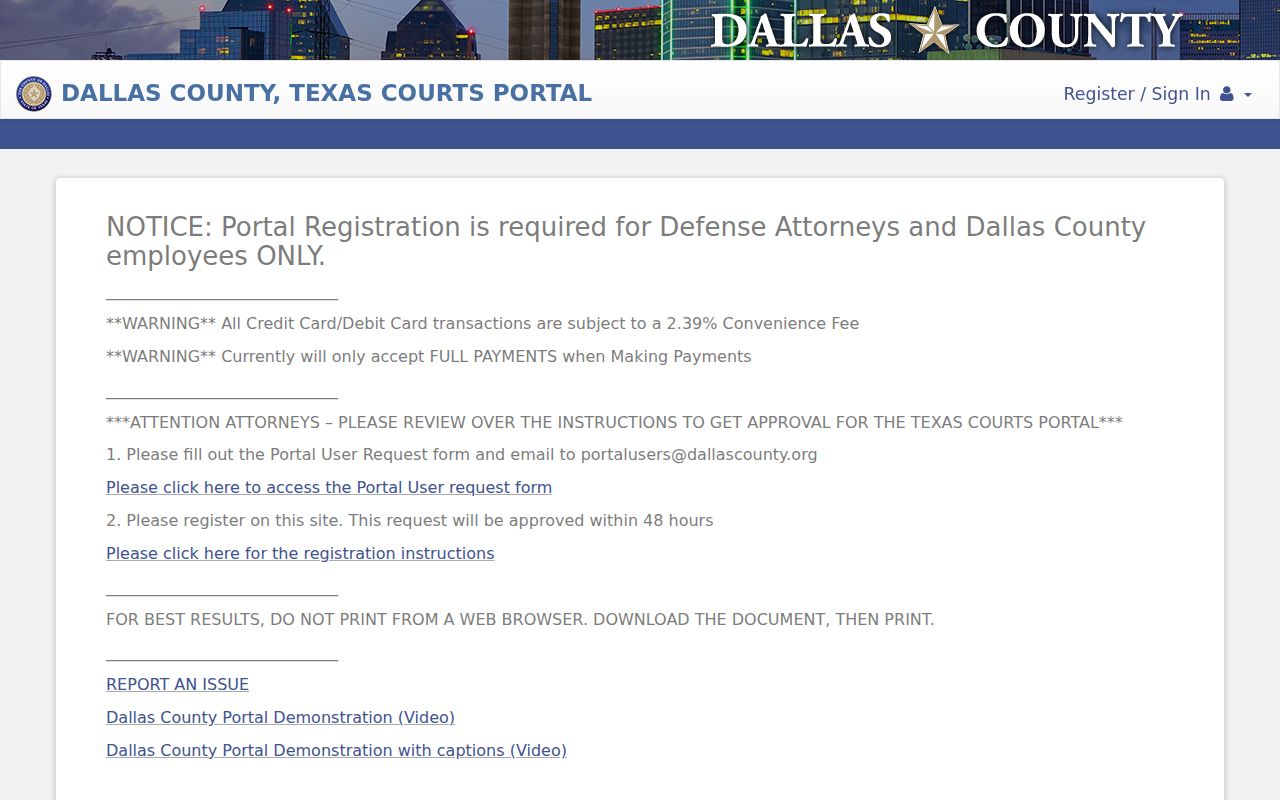
The Dallas County records-search hub directs users to County Civil, Criminal, Probate, and District Court routes. In the main court portal, Smart Search is the required starting field, with Advanced Search, Court Location, Search By, Party Search Criteria, Search Cases, and Submit controls. Hearing Search adds location, hearing type, search type, optional Sounds Like, search criteria, and a date range. An empty result means the record was not found in that interface. It does not prove that no case exists.
Criminal searching has different rules. The name route requires a case number and last name, while first and middle names, name type, race, sex, date-of-birth fields, number type, and pending status are additional fields or dropdowns. County Clerk material includes misdemeanor records. Felony records point to the District Clerk. Probate can be searched by cause number or first and last name. For a probate copy, use the case number and style with the appropriate clerk route.
The Dallas County and District Courts portal is the public starting screen for court-name research.
The portal is useful for a party name and case identifier, but the clerk or a public terminal may offer the next access channel when an online result is thin.
Dallas Court Record Results
A daily county civil docket sample displayed a party label, floor or court, time, and case number. Each field helps route a request, but none should be stretched beyond its function. A party label can contain initials, punctuation, a business name, or a minor-style notation. A scheduled time can change. A case number is the useful bridge to the clerk’s file request. It is not a finding about a person’s current location or status.
| Visible field | What the Dallas result supports |
|---|---|
| Party Name | The label printed in the docket, which can use initials, minor notation, punctuation, or a business name |
| Floor/Court | Court location or courtroom assignment for routing, not a disposition |
| Time | Scheduled docket time, which can be reset or changed |
| Case Number | A linkable identifier to use with the clerk’s file request |
| Charges, bond, disposition | Possible in a fuller case view, but not something to infer when absent from the daily docket |
Dallas District Clerk civil and family records are at George Allen, criminal records are at Frank Crowley, and juvenile records are at Henry Wade. Public terminals or the counter can supply a fuller index or a certified-copy route. County pages have reported building repairs and operational changes, so confirm the custodian’s live contact information before an in-person trip. Sealed, expunged, confidential family, adoption, juvenile, and protected records do not become public through a name search.
Verify a Dallas Resident
Verification means anchoring a name before adding more sources. Keep the original spelling while testing middle initials, suffixes, hyphens, Spanish compound surnames, maiden names, Mc and Mac spacing, and married names. A single name result is weak in Dallas. Pair it with a second field that the sources actually support, such as a parcel legal description, spouse, occupation from a dated directory, case style, yearbook, or a date. If two candidates conflict, keep both candidates rather than selecting the convenient one.
- Record the person’s full name and every legitimate spelling variant. Note the known city, county, date, address, case number, or family connection.
- Use the voter tool or Dallas courts portal as an initial match. Retain the county, case number, precinct, or other non-sensitive discriminator that the result lawfully displays.
- Search DCAD by owner name and compare the owner label, situs address, mailing address, legal description, and account history. Do not state that a mailing label proves current residence.
- Search recorded documents by grantor or grantee and date. A deed, lien, release, or assumed-name filing can establish a dated transaction, not automatic occupancy.
- For a family question, compare a marriage or death index, probate, obituary, yearbook, church register, or directory. Request a certified copy from the named custodian only when the access rules allow it.
- Docket
- A court’s calendar or case listing. It can identify a case and setting, but it is not the complete court file.
- Index and image
- An index lists searchable details such as a name or case number. An image is the underlying document page, which can have separate access or purchase rules.
- Certified copy
- A copy issued or authenticated by the record custodian for uses that require official certification.
Note: Keep the record’s exact name, jurisdiction, date, and the reason a second record belongs to the same person.
Dallas Vital Record Routes
Vital-record jurisdiction comes first. Dallas City Office of Community Care Vital Statistics handles qualifying events inside Dallas city limits. The Dallas County Clerk handles county marriage records and birth or death records outside the city limits. Texas DSHS handles statewide indexes, applications, verifications, and eligible copies. A divorce decree is normally a District Clerk court record, while a divorce verification is a separate DSHS product. Asking the right custodian avoids a false dead end.
DSHS digital birth indexes cover 1925 to the present and digital death indexes cover 1965 to the present. Earlier microfiche begins with 1903 material, subject to confirmation by request. Those indexes are alphabetized by surname and can show given name or initials, event date, county, and sex. They are leads, not certified certificates. Texas Government Code section 552.115 makes birth records public after 75 years and death records public after 25 years, while eligibility rules still shape other products.
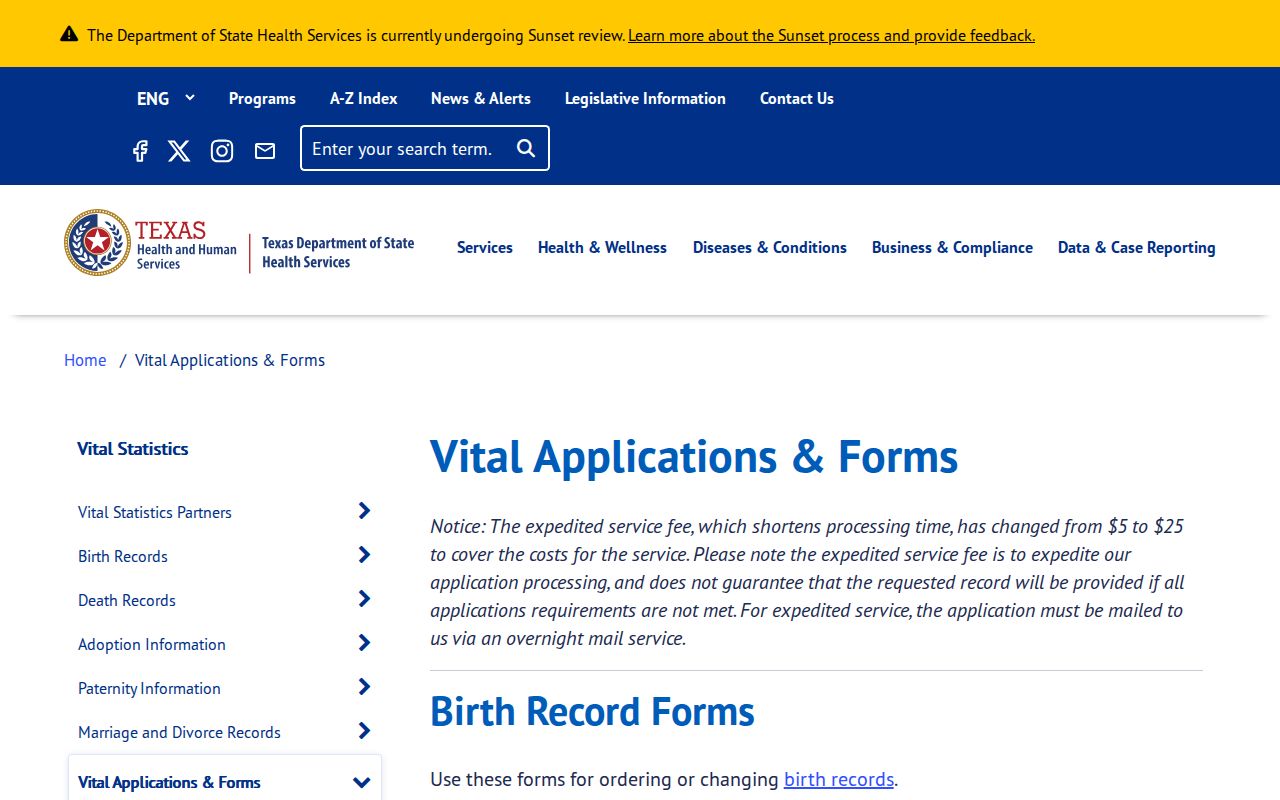
Texas DSHS vital-record forms list application and correction routes that can follow a Dallas resident lookup.
For a probate record, a cause number or case style helps the clerk locate the file. Dallas probate requests use separate email routes for pre-2013 and 2013-current records, and certified copies can be ordered by e-file, mail, or in person.
Dallas Business Record Clues
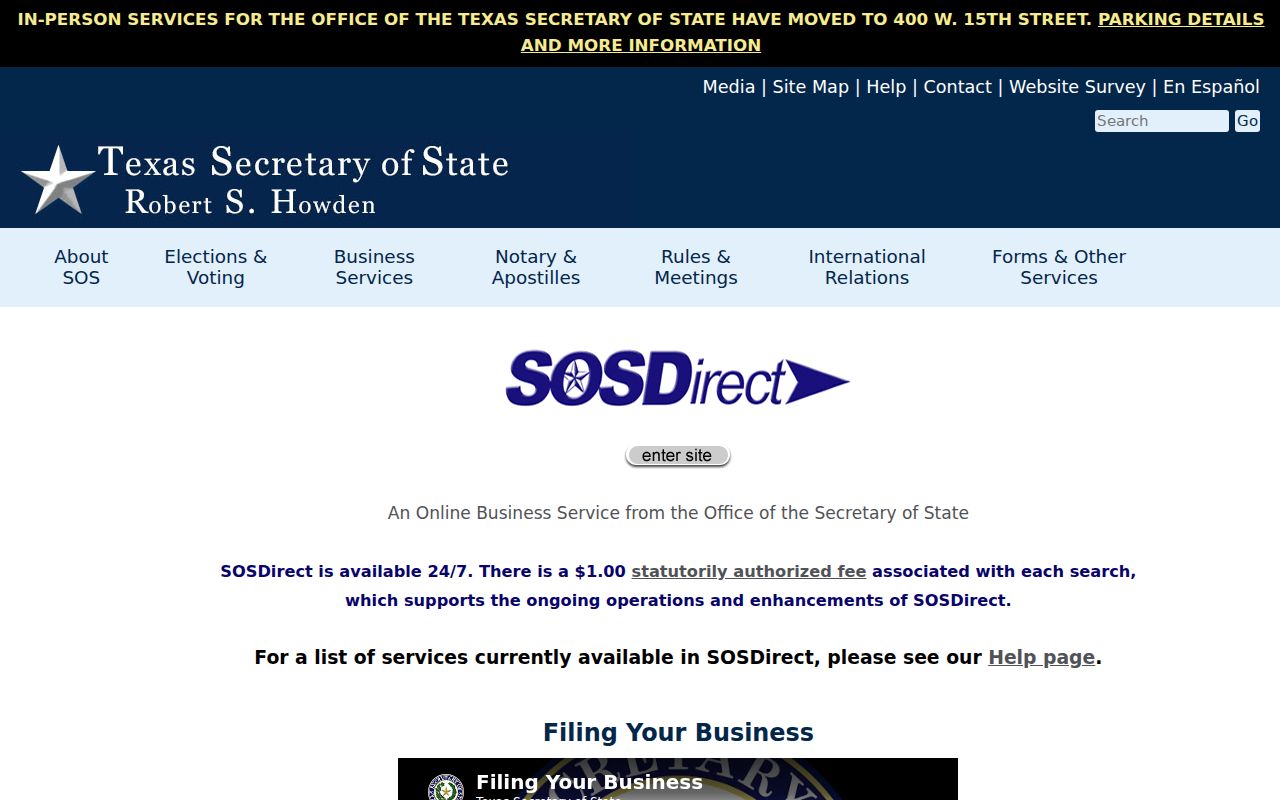
Business records can test a business relationship without turning a service address into a resident finding. Texas SOSDirect uses a login or temporary account and charges $1 for a search. A filing history can show the entity name, filing number, status, registered agent, officers or managers, organizers, business address, amendments, and image PDFs. The Secretary of State redacts sensitive identifiers. A registered agent is a service contact and may not be an owner or a Dallas resident.
Dallas County assumed-name filings are the local route for unincorporated sole proprietorships, sole practitioners, and general partnerships. Incorporated assumed names moved to the Secretary of State under HB3609 effective September 1, 2019. When a person is tied to a business, compare the filing date, entity name, county assumed-name record, and a relevant public credential if appropriate. These are separate, dated business clues.
Texas SOSDirect shows the account-access entry point for business-organization research.
The result can corroborate an entity connection. It cannot, by itself, establish where a person currently lives.
Dallas Names Need Two Fields
Dallas had 1,304,379 residents in the 2020 Census and a 2024 estimate of 1,326,087. At that scale, a surname alone can return several plausible people. Compound and hyphenated surnames, initials, accents, apostrophes, Spanish naming order, maiden names, and Mc or Mac spacing increase the chance of a false match. DCAD specifically flags McDonald and Mc Donald variations. Search each documented form, then use a parcel, case style, spouse, year, or other independent field to decide whether records belong together.
For a former classmate or a family-history question, Dallas Public Library has yearbooks, newspapers, directories, maps, oral histories, photographs, and other local-history material. An old directory or obituary can bridge an earlier name to a later record, but it needs a date and source citation. When the web index ends, use the County Clerk document-copy form, a District Clerk file desk, a probate email route, a city public-information request, the library reading room, or state archival microfilm. A documented handoff is better than guessing.
Dallas Resident Lookup Limits
Texas public-record access has real limits. The Texas Address Confidentiality Program provides a substitute mailing address and mail forwarding for qualifying survivors. Protected voters can seek confidentiality through SOS Form 21-19. Court files can be sealed, expunged, confidential, juvenile, adoption-related, or otherwise protected. Voter records protect Social Security, Texas driver-license, and DPS identification information under Texas Election Code sections 13.004 and 18.005. A missing address may be deliberate protection, not an error.
Lawful use. Use Dallas resident lookup results for lawful personal research, family history, civic verification, or estate and property questions. Do not use a result to threaten, surveil, intimidate, stalk, harass, or expose sensitive information about anyone.
A correction goes to the office that holds the record. Ask DCAD about parcel or address errors, the County Clerk about an index or image error, the court clerk about case-index data, the elections registrar about voter data, and DSHS about vital-record corrections. Texas Public Information Act requests should be narrow, with the name, record type, date range, and jurisdiction stated clearly. Check a portal or email address before sending identity information because Dallas County reported a 2024 cybersecurity incident involving phishing messages.